
Non-Hormonal Ways to Sleep Better Through Perimenopause
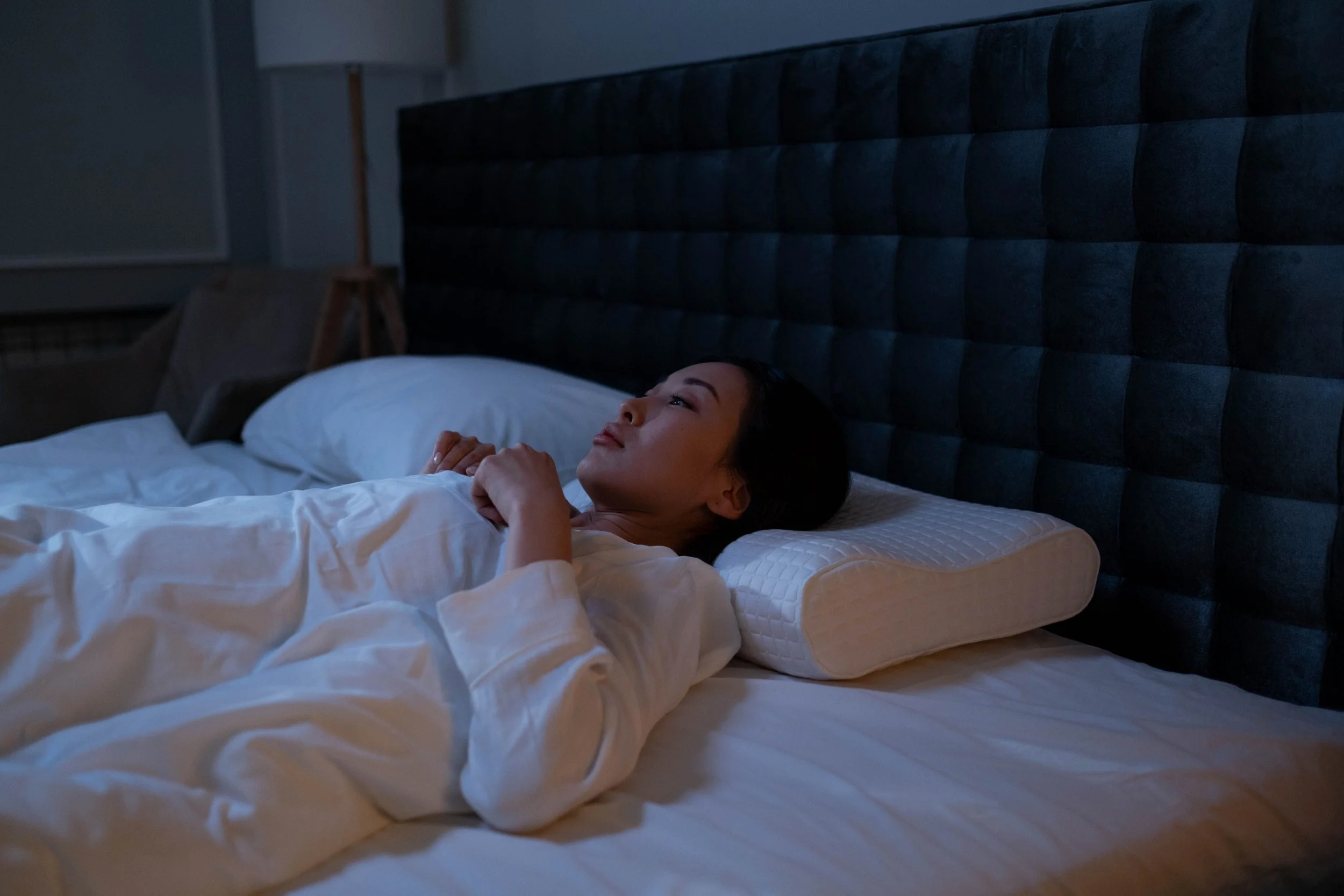
Photo: Cottonbro Studio / Pexels
For many women, the first clue that the perimenopause has arrived isn’t a hot flush – it’s staring at the bedroom ceiling at 2 o’clock in the morning. If that sounds familiar, you’ve likely already looked into Hormone Replacement Therapy (HRT) which replaces hormones that naturally decline at this stage of life.
But HRT isn’t the whole story. Whether you have already decided against it or are still reading everything you can find out about reclaiming a decent night’s sleep, there are other options available.
Let’s assume you've already had the HRT conversation. Maybe your GP raised it before you'd finished describing your symptoms – or even dissuaded you before you’d got as far as asking for it. HRT prescribing isn’t uniform across the country. Maybe the decision wasn't entirely yours to make: a breast cancer history, perhaps. A clotting risk, a family conversation that closed the subject before it opened. We’re not trying to get you to reverse your decision. We’re going to offer you realistic alternatives. A list, in short, and who doesn’t love a list?
By the end of this article, you’ll know if it’s not going to be HRT then there are other things you can turn to that genuinely help. We’ll tell you what each option can do, and just as crucially, what it can't do.
Why non-hormonal advice is so hard to find
Perimenopausal sleep disruption isn't new, nor is it a minority complaint. It’s estimated that between 39% and 47% of perimenopausal women report significant sleep problems, rising to around 60% after menopause itself. Of over 5,700 women who responded to a 2024 survey by Dr Louise Newson, 79% listed sleep problems as a menopause symptom. That’s a lot of women getting rotten nights. If you’re one of them, you’re roughly among two in five. Let’s say that loud and clear: you are not an outlier who's failing to cope.
Go online and search for non-hormonal help, you'll mostly find pages that are built the same way. After a few searches, you’ll notice they repeat each other. HRT is first explained in detail, with alternatives tacked on afterwards like a footnote for those who can't have the "real" treatment. If you’re choosing not to use HRT, that’s unhelpful which is why we’re giving you the non-hormonal solutions first. We’ll start with the weakest option and work up to the most effective. When you’ve reached the end of the list, you’ll be seeing products that other women have found genuinely help them sleep through perimenopause.
Why sleep falls apart in perimenopause
The connection between sleep and menopause comes down to two hormones — oestrogen and progesterone — the principal female reproductive hormones, which decline as perimenopause advances. As levels drop, your sleep can be directly affected for the simple reason that both these hormones interact with the brain systems that regulate sleep. This is why HRT tends to improve sleep quality, because it replaces what the body is losing. There's also an indirect route to improved sleep through using HRT: hot flushes and night sweats, which can so easily wreck a good night’s sleep, become less severe. As do the mood swing that can make it harder to switch off in the first place. Let’s not forget that many women at this stage of their lives are juggling careers, teenage children and ageing parents. Researchers studying this life stage have a name for this overload. The "sandwich generation" effect. It still mostly falls to women to keep all the conflicting life-demands in motion and somehow come out smiling. None of this is in your head, and you shouldn’t have to accept insomnia as the inevitable by-product. The perimenopausal stage of life should not feel like an endless marathon through treacle. It can be so much better.
Don’t worry, the list is coming. But before we get there, let’s look at a few simple changes to your daily routine that can make a surprising difference.
First, the foundations: simple habit changes
This may not be the most glamorous part of this article, but it’s often where the biggest gains can be made. A cool, dark room is more likely to help you sleep than it did in your thirties. Why? Because temperature regulation gets less stable during perimenopause. Alcohol is another common culprit as it undermines your sleep even if it helps you drift off initially. The same goes for caffeine. We all know a late-night coffee can keep us awake, but here’s something you may not be aware of: As we get older, caffeine stays in our bodies longer. That innocent early evening espresso might still be in your system as bedtime approaches. Decaf is an obvious alternative, but how about a cup of peppermint tea instead? Save your coffee for the morning so it won’t still be haunting you at bedtime.
Setting your alarm for a fixed wake-up time – even after a dreadful night’s sleep – does more to reset your body clock than an extra hour in bed on a Saturday. None of this will cure perimenopausal insomnia on its own. What it does do is create the best possible foundation. A few simple changes can give every other intervention their best chance of succeeding.
It will make it easier to judge what’s working. Keeping habits as consistent as possible gives you a better idea whether a supplement, dietary change or other intervention is working.
Non-Hormonal Sleep Help for Perimenopause, Ranked by Evidence
And now… drum roll please
We promised we’d start our list with those non-hormonal options that have the least scientific evidence behind them and work our way up to those with the best. That doesn’t mean the earlier suggestions are worthless. Far from it. Every woman is different and any of these might earn a place in your better-sleep toolkit.
Supplements: what the evidence shows
Magnesium is the one most women reach for first, and with good reason. Of all the over-the-counter options, it’s one of the better researched. When scientists combined the results of several clinical trials, they found that people taking magnesium fell asleep, on average, 17 minutes faster than those taking a placebo. Before you rush to the chemist, though, there’s an important caveat. The studies weren’t thoroughly robust and did not specifically study perimenopausal women. Even so, magnesium is inexpensive and low risk for most people. Seventeen minutes’ extra sleep might seem modest, but if you’re lying awake night after night, it’s worth having.
A quick note from us here at Zeez: we’ve long believed that magnesium deserves more attention than it gets. We don’t just see it as a sleep supplement. It’s involved in hundreds of processes throughout the brain and the rest of the body, including nerve and muscle function. Modern diets don’t provide nearly enough, so we recommend a magnesium supplement to all our users.
Black cohosh has been used as a menopausal supplement for many years but the supporting evidence is much less convincing. A major review of 16 trials involving over 2,000 women concluded there simply wasn’t enough good-quality evidence to support its use for menopausal symptoms, including poor sleep. Some studies reported a small improvement with hot flushes while others showed none at all. At present, it’s fair to say that the jury is still out.
CBD (Cannabidiol) from compounds found in the Cannabis sativa plant. The evidence for this is more promising. There's growing pharmacological interest in the potential of cannabinoids to help sleep, but the evidence specific to perimenopausal insomnia is still limited. Much of it is anecdotal and the effective dose varies enormously person-to-person. The UK market for CBD products is inadequately regulated, both for potency and purity, so it’s a case of “buyer beware”. That's no reason to write CBD off, but it’s always a good idea to treat glowing reviews on social media, on websites, or even in articles like this, with a healthy dose of scepticism.
CBT-I – Cognitive Behavioural Therapy.
This technique carries the strongest evidence for sleep improvement yet, though for some reason, it’s the option that rarely gets mentioned first. Perhaps that’s because it asks more of us. Swallowing a supplement with a glass of water is undoubtedly easier to fit into a busy life than changing long-established habits and thought patterns. But read on because this approach could be the turning point. Rather than masking the problem, CBT re-trains the mind and body to sleep well again. Even through perimenopause. For many women, the benefits go on long after the programme has finished.
The reason CBT-1 comes so highly recommended is simple: it works. When researchers combined the results of 20 randomised controlled trials looking at chronic insomnia, they found that people fell asleep almost 20 minutes sooner and spent around half-an-hour less lying awake during the night. People using this technique improved their sleep pattern overall. Even more reassuringly, the results hold up for women going through menopause. A study of eleven trials with nearly 1,000 participants found consistent improvements in both sleep quality and the severity of insomnia. Better still, it didn’t seem to matter if CBT training was delivered in person, over the phone or online.
Here's the catch, though. NHS waiting lists for structured CBT-I are long and it can be a postcode lottery as to whether you get it at all. Private sleep psychologists aren't cheap. Reputable app-based and self-guided CBT-I programmes exist and have trial evidence behind them, making them a good starting point if one-to-one therapy isn't realistic right now.
Overall, CBT-1 is the non-hormonal option with the best data to back it. It's also, often, the hardest one to get hold of.
Prescription options that don’t contain hormones
Saying no to HRT doesn't mean there's nothing for your GP to offer. Certain antidepressants, SSRIs and SNRIs, along with gabapentin and clonidine, can help with vasomotor symptoms – the hot flushes and night sweats that often wake you up in the first place. In some countries, a low-dose paroxetine is specifically licensed for treating these symptoms. It’s worth noting that expert guidance isn’t the same everywhere. In the UK, older NICE guidance has been more cautious about recommending SSRIs and SNRIs for menopausal symptoms whereas the North American Menopause Society rated several of them as good and produced consistent evidence in a 2023 statement. It doesn’t mean one side is right and the other wrong. It’s an evolving issue and a genuine live discussion in menopause medicine. Certainly, it’s worth raising with a GP or menopause specialist. These medications carry their own side effects, which can include nausea, sexual dysfunction and drowsiness, depending on the drug. These aren’t a simple upgrade on HRT, and both SSRIs and SNRIs come with a different set of trade-offs.
What's left once you've considered the above?
You've fixed the room temperature, cut back on the evening wine, started magnesium, got onto a CBT-I programme and talked to your GP about non-hormonal prescriptions. Some women find that's enough. Others still lie there at midnight with a brain that simply won't stop churning. Wide awake in the dark, running through tomorrow's to-do list, regardless of what triggered the wakefulness. That's a different problem from the ones we’ve outlined up to this point because it's not about hormones. It’s not really about habits either. It's about the brain's arousal state at the exact moment it's supposed to be switching off.
Working at the level of the brain itself
This is the dilemma the Zeez Sleep Pebble was built for. It's a small device that sits under the pillow and generates extremely low-power signals matched to the alpha, theta, and delta brainwave frequencies of a good sleeper. There’s no app, no noise, no skin contact. You switch it on once and then forget it. The pebble isn’t there to sedate you or affect your hormone levels. Instead, it targets what happens after your hormones have already disturbed your sleep – the racing-brain at midnight, the sudden wake-up, rather than the trigger itself. The signal it uses - and why it's tuned to those specific brainwave frequencies - is worth understanding, and we've explained how the Zeez signal works in full separately. The Zeez Sleep Pebble is a one-time purchase with no ongoing app or subscription attached.
The Zeez Sleep Pebble isn't a medical treatment for perimenopause or its symptoms. It's a tool to help the problem that changing your habits, taking supplements or embarking on CBT therapy can't always reach. It works when your body is exhausted and your brain still won't stop.
If you share a bed with someone who's watching all of this from the outside and isn't quite sure how to help, a guide for partners covers that side of things too.
There is no single answer to perimenopausal sleeplessness and anyone claiming to have one is almost certainly oversimplifying things. The good news is that there are several different approaches, each with evidence behind them. Instead of chasing the latest trend, take a thoughtful, informed approach and give each option a fair chance. Better sleep is rarely about finding one miracle cure. It’s about finding a combined approach that works for you.
See how the Zeez Sleep Pebble works
Sources
Stanford Lifestyle Medicine — How Perimenopause Affects Sleep
Hone Health, citing Harvard Health — Menopause Insomnia
Sleep Disturbance and Perimenopause: A Narrative Review, NCBI
The Effectiveness of CBT on Insomnia Severity Among Menopausal Women, MDPI
Effects of CBT on sleep quality in menopausal women: meta-analysis, PubMed
Oral magnesium supplementation for insomnia: systematic review, NCBI
Black cohosh (Cimicifuga spp.) for menopausal symptoms | Cochrane
Non-hormonal-based treatments for menopausal symptoms British Menopause Society
The 2023 nonhormone therapy position statement The North American Menopause Society
ACOG Guidelines on Management of Menopausal Symptoms
Does hormone replacement therapy (HRT) cause cancer? Cancer Research UK
Menopause and Clots The Menopause Charity