Why Teeth Grinding Leaves You Tired, Not Just Sore
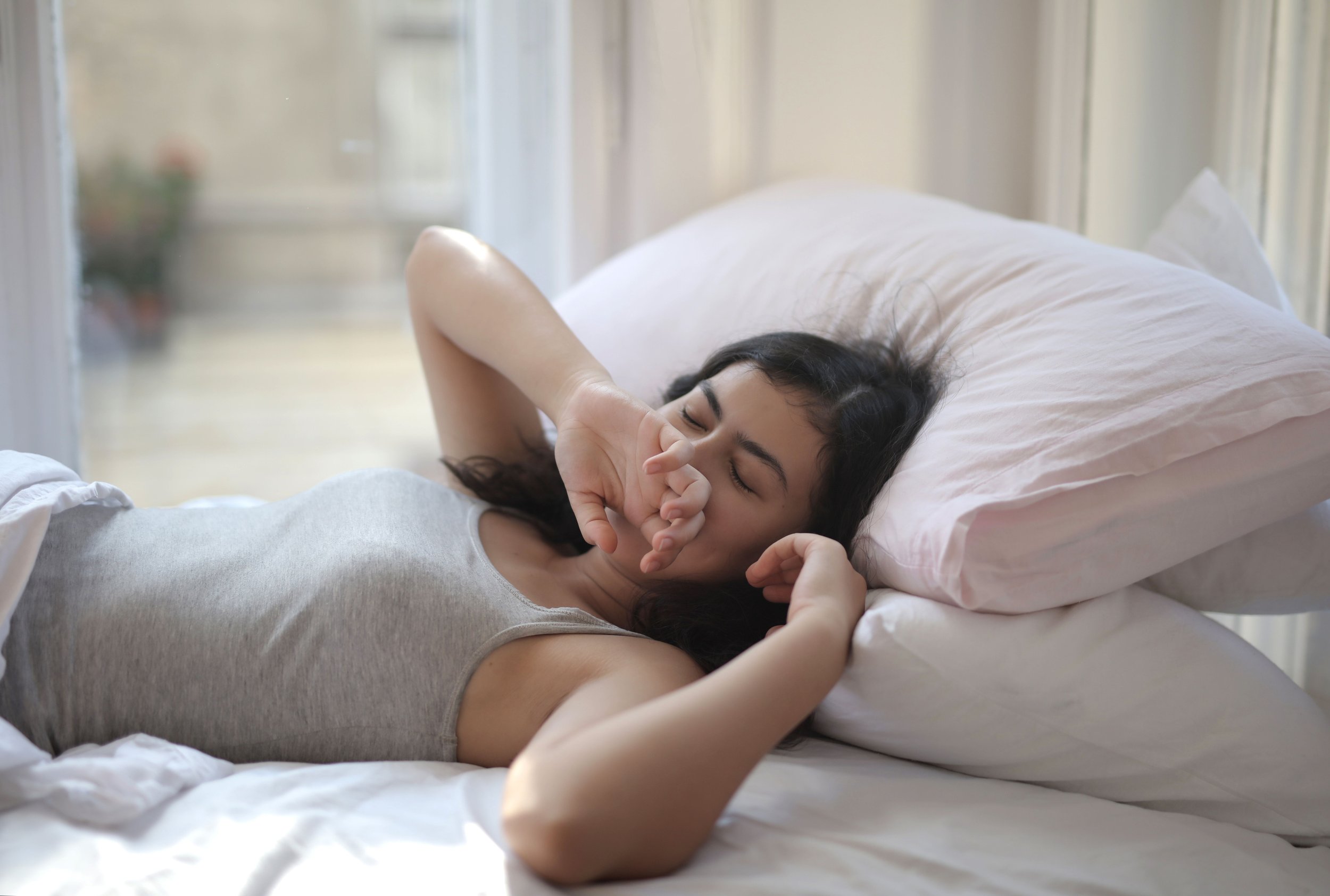
Photo by Andrea Piacquadio
You're not tired because you grind. You grind because you keep half-waking.
If you grind or clench your teeth at night and regularly wake up feeling exhausted, the two things may be connected – though not in the way you might think. It isn’t so much the grinding that makes you feel tired. And it isn’t tiredness that makes you grind your teeth but there is a link.
Teeth grinding and poor-quality sleep can be the result of repeated, brief wake-ups through the night. This is often described as “sleep fragmentation” or “sleep arousals”. It could be occurring dozens of times at night, with you completely unaware. Those wake-ups can leave you feeling unrefreshed in the morning. And while teeth grinding is just a symptom, it’s something your partner – and certainly your dentist – will notice.
At a glance: Teeth grinding, “bruxism” to give it its clinical name, often happens around brief arousals from sleep.
· These arousals can be so brief, you never know about them.
· The grinding itself may not be making you tired. That’s down to fragmented sleep.
· A mouth guard may protect your teeth, and it’s something dentists recommend. It won’t stop the waking.
· Stress and anxiety play a part in teeth grinding
There isn’t yet evidence that the Zeez Sleep Pebble helps reduce bruxism specifically, but it is designed to produce the deeper sleep where these arousals are less likely to occur.
Chris, who used the Zeez Pebble to help improve his sleep, has experienced bruxism over many years and like Chris, you might recognise the pattern without ever having put a name to it.
You wake with an aching jaw, a stiff neck or a headache and can’t think how when all you’ve done is lie in bed for eight hours. Later, your dentist asks if you clench at night, because there’s evidence of grinding on the surface of your teeth. If it’s really bad, your dentist might offer to fit a mouthguard.
And again, like Chris, you repeatedly wake unrefreshed, however early you went to bed. Any of these on their own is enough. Together, they mean another day starts badly. This is his story:
“I’d hear clenching being mentioned at nearly every dental check-up. It went on for years, though it was never quite bad enough to warrant a mouthguard. What started me on a search for answers wasn't my jaw— it was my neck. Stiff most mornings, limited movement, and it would often seize up before the end of the day. I put up with it for years without ever connecting it to what my dentist kept flagging up.”
Why does teeth grinding make you tired even if you're getting eight hours sleep?
The simple answer is that your eight hours in bed isn’t really the issue. It’s quality of sleep that really matters. As I’ve mentioned already, grinding happens during brief arousals. These are seconds-long flickers where the brain and heart activate before settling down again. They are usually too fast and shallow to wake you fully. They won’t register on a basic sleep tracker either. A study by Kato and colleagues monitored ten people with sleep bruxism overnight and a control group of ten people who didn’t suffer with it. The study found that cortical brain activity rose for roughly four seconds before the majority of grinding episodes (79%), with heart rate accelerating even earlier than that [1]. It was a small study — only ten patients and ten controls — so we can’t draw sweeping conclusions from it. But in the people studied, the sequence was remarkably clear: Arousal first. Heart rate next. Jaw last.
Is the audible grinding actually the rare part?
A bad case of bruxism is noisy, and quite disturbing to a partner forced to listen to it every night. A separate sleep study compared 82 people with no bruxism diagnosis to 33 confirmed grinders and found that nearly 60% of the "normal" group showed the same rhythmic jaw-muscle activity during sleep. The difference was they weren’t producing the tooth-grinding sound that draws attention to the problem [2].
Grinders had roughly twice as many jaw muscle contractions during each episode, and those contractions were stronger. It’s important to note that their bruxism was simply a more intense variation of something most sleepers are already doing– just more quietly. Once you realise that what you can hear is the loud end of a spectrum, you’ll appreciate that most of us sit on that spectrum somewhere. Maybe now your morning exhaustion isn’t such a big mystery. You're not unrefreshed because you clenched. You're unrefreshed because your sleep was repeatedly interrupted by brief arousals that never fully woke you. The grinding happens to be the only part of this that left evidence behind.
What actually helps, and what it doesn't touch
| Option | Evidence strength | What it actually addresses | Access & cost |
|---|---|---|---|
| Custom night guard | Strong evidence for protecting teeth from wear | Enamel damage only — not the arousals or the tiredness | NHS (if damage present) or private, roughly £150–£400 |
| Botox into the masseter | Moderate evidence for reducing grinding intensity | Muscle contraction, not the underlying arousal pattern | Private only, typically £250–£600, repeated every 3–4 months |
| CBT for insomnia | Strong evidence for improving sleep continuity | Sleep fragmentation broadly, the territory arousals sit in | NHS referral (limited availability) or private therapist |
| Stress or anxiety treatment | Moderate evidence linking stress to arousal frequency | Daytime nervous system load carrying into sleep | Self-directed and free, up to private therapy costs |
| Sleep-quality approaches (including the Zeez Sleep Pebble) | Deep sleep–arousal link is well established; evidence for specific devices is early and anecdotal | The arousal-prone sleep architecture rather than the jaw | Varies by product |
Having a mouthguard fitted to protect your tooth enamel is a good first step. At the same time, finding a way of reducing sleep-time arousals may work in a complementary way. These approaches tackle the two problems that share your nighttime hours– the physical grinding and the disrupted sleep that may lie behind it.
Why does bruxism hit some people harder than others?
Anyone can grind. But a nervous system that's running hot during the day tends to carry over into sleep. You can see it as a nervous system that remains switched on, even when you’d rather it didn’t. It’s the guard dog that stays on high alert when it ought to be tucked up in its basket. Whatever the trigger, chronic stress or hormonal changes, for instance, the result can be disturbed sleep. This is particularly noticeable among women in perimenopause. One large study of more than 3,000 women found that 31–42% of them experienced symptoms of insomnia during that phase of their life, with waking during the night being the single most common complaint [3].
That doesn’t mean that perimenopause causes teeth grinding. Rather, grinding and fragmented sleep appear to share the same territory. One doesn't necessarily cause the other. Both can be signs of disrupted sleep.
If:
You have worn or cracked teeth.
You experience jaw pain and it doesn’t ease off after you get up.
Then you should definitely see your dentist.
A mouthguard is the best tool for protecting the teeth themselves, regardless of anything else you’ve read in this piece. It is low-tech, comparatively cheap and while it may feel intrusive at first, it will help protect your teeth.
On a separate note, if you know you snore or a partner has told you that you seem to stop breathing at night, then you should consult your GP. A lot of research has been done to establish if bruxism and sleep apnoea are directly connected. The findings are mixed. Some studies find teeth grinding occurs alongside apnoea, others find it to be less clear [4]. What isn't in doubt is that any pauses in breathing during sleep need to be looked into, regardless of what your jaw is doing.
Does better sleep reduce everyday exhaustion?
Fragmented sleep and teeth grinding are both linked to feeling tired during the day. We also know that sleep arousals and tooth grinding happen during lighter, non-REM sleep rather than during the deep phase. What hasn’t been established for any consumer product, including ours, is whether changing sleep patterns can reduce bruxism specifically. The Zeez Sleep Pebble is designed to prompt the brainwave patterns associated with deep sleep. It seems logical that episodes of bruxism might decrease as deep sleep improves, but we haven’t tested this.
We would be delighted to do so. Dentists, if you would like to work with us and give your patients the chance to test the Zeez, let us know.
Back to Chris:
“No one told me about bruxism before I started using the Zeez Sleep Pebble. I simply felt my neck stiffness easing within days. I asked whether there could be a connection and learned that, yes, there could be. My experience is my personal account only. It could be coincidence, it could be unrelated to using the Zeez.* I’m just passing on what I experienced for myself. My sleep has improved since I started using the Zeez, and my neck pain has decreased. Happy coincidence? I cannot say. All I know is, things have improved for me.”
*We haven't tested the Zeez Sleep Pebble for its effects on neck tension any more than we've tested it against grinding itself.
And please note, the Zeez Sleep Pebble isn't a replacement for a mouthguard. It won't protect your teeth! If you’d like to see if the Zeez Sleep Pebble can help you sleep better, there's a 45-night trial and full refund if it doesn't help.
Some common questions around poor sleep and bruxism
Does teeth grinding cause tiredness, or is something else going on?
They appear to be linked through the frequent brief arousals that happen during sleep. Grinding is the part you can hear and feel.
My dentist has mentioned grinding for years but I've never needed a guard. Should I be worried?
Not necessarily about your teeth if your dentist hasn't found actual wear or damage. But it's worth treating this as a sign your sleep may be more fragmented than it feels, especially if you're also waking up feeling tired.
Could this actually be sleep apnoea instead?
Possibly, and it's worth ruling that out separately. If you snore heavily or have been told you stop breathing at night, see your GP regardless of the grinding.
Is the Kato study reliable evidence for all of this?
The Kato study, outlined earlier in this piece, is a small, well-designed piece of research (10 patients, 10 controls) that mapped the arousal-to-grinding sequence clearly in those people it measured. It provides useful evidence of a connection between disturbed sleep and bruxism but the study was too small to tell us that the sequence would be true for everyone.
Further reading: How Zeez Works · The Sleep Pebble
Sources
Kato T, Rompré P, Montplaisir JY, Sessle BJ, Lavigne GJ. Sleep bruxism: an oromotor activity secondary to micro-arousal. J Dent Res 2001. — https://pubmed.ncbi.nlm.nih.gov/11706956/
Lavigne GJ, Rompré PH, Poirier G, Huard H, Kato T, Montplaisir JY. Rhythmic masticatory muscle activity during sleep in humans. J Dent Res 2001;80(2):443–8. — https://doi.org/10.1177/00220345010800020801
Ciano C, King TS, Wright RR, Perlis M, Sawyer AM. Longitudinal Study of Insomnia Symptoms Among Women During Perimenopause. J Obstet Gynecol Neonatal Nurs 2017. — https://pubmed.ncbi.nlm.nih.gov/28886339/
Prevalence of bruxism in obstructive sleep apnoea (OSAS) patients: a systematic review. https://www.iris.unict.it/handle/20.500.11769/570029
Jardim Barbon et al Sleep-related factors and orofacial pain symptoms associated with rhythmic masticatory muscle activity frequency https://www.sciencedirect.com/science/article/abs/pii/S1389945722012485
Struggling to sleep?
The Zeez Sleep Pebble sits under your pillow. Press the button and settle down to sleep. No app, no headband, no electrodes.
Discover the Sleep PebbleFree UK shipping and a 45-day trial period